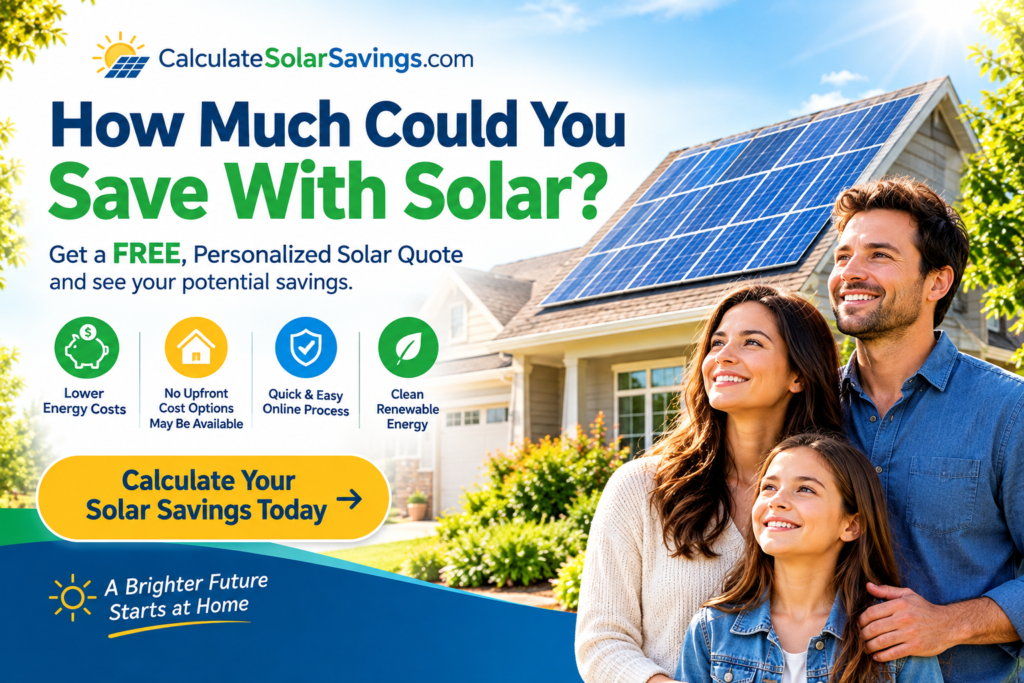
Electricity costs can take a significant part of a household budget, especially when energy prices continue to change. For many homeowners, solar energy has become an option worth exploring—not only because solar panels can generate clean electricity, but also because they may help reduce dependence on traditional utility power.
The important question is: How much could solar actually save you?
The answer depends on several factors, including your home, electricity usage, location, available sunlight, utility rates, and the solar system that may be suitable for your property. That is why getting a personalized estimate can be more useful than relying on a general savings number.
Why Are Homeowners Considering Solar?
Solar energy allows a home to generate electricity from sunlight using photovoltaic solar panels. Instead of relying entirely on electricity supplied by the local utility, a solar-equipped home can produce some of its own power.
For homeowners, the potential benefits may include:
- Reducing reliance on traditional electricity
- Exploring potential long-term energy savings
- Taking advantage of available solar incentives where applicable
- Using a renewable source of energy
- Increasing awareness and control over household energy consumption
However, solar isn’t the same for every home. A system that makes sense for one property may not be the right choice for another.
What Determines Your Potential Solar Savings?
There is no single savings figure that applies to every homeowner. Several factors can influence the potential value of solar.
1. Your Current Electricity Usage
A household that uses more electricity may have different solar needs than a home with relatively low energy consumption.
Your current utility bills can help provide an idea of how much electricity your household uses and how solar could potentially fit into your energy plan.
2. Your Location
Where you live matters because solar production depends partly on available sunlight. Different areas of the United States receive different amounts of sunlight throughout the year.
Local electricity prices and utility policies can also affect the potential economics of a solar installation.
3. Your Roof
The size, orientation, condition, and shading of your roof can all influence whether solar panels are suitable for your property.
Trees, nearby buildings, and other structures that create shade may affect how much electricity a solar system can produce.
4. Your Solar System
Solar systems can vary in size and equipment. The appropriate setup depends on factors such as household energy consumption and the characteristics of the property.
A personalized quote can help homeowners understand what options may be available rather than making a decision based on a generic estimate.
Is Solar Worth Considering?
For some homeowners, solar may provide an opportunity to reduce their dependence on traditional utility electricity and potentially lower energy costs over time.
But the right decision depends on your individual circumstances.
Before moving forward, homeowners should consider:
- Current electricity costs
- Expected household energy usage
- Available roof space
- Local solar conditions
- Available incentives or programs
- Financing or purchase options
- Estimated system costs
- Potential long-term savings
Doing this research can make it easier to determine whether exploring solar makes sense for your home.
Get a Personalized Solar Savings Estimate
Instead of guessing how much solar might save you, you can start by getting a personalized estimate.
CalculateSolarSavings.com gives homeowners an opportunity to explore their potential solar savings and request a personalized solar quote.
The process is designed to make it easier to learn about solar options based on your home’s circumstances.
You can start by providing basic information about your location and property and then explore the solar options that may be available.
What About Upfront Costs?
One of the biggest questions homeowners have is how much a solar system will cost.
Solar pricing can vary depending on the size of the system, equipment, installation requirements, location, and other factors. Financing options may also be available in some situations, depending on the provider and the homeowner’s eligibility.
Rather than assuming a particular price or savings amount, it is better to review a personalized quote and understand the terms before making a decision.
Solar Can Be More Than Just Saving Money
While potential energy savings are an important reason people consider solar, there are other reasons homeowners may be interested.
Solar energy uses sunlight to produce electricity and can help households reduce their reliance on electricity generated from conventional sources.
For homeowners interested in renewable energy, installing solar can therefore be both an energy and financial decision.
How to Get Started
If you’re curious about whether solar could make sense for your home, you don’t have to make a decision immediately.
Start by finding out what your potential savings could look like.
A personalized solar estimate can help you understand:
- Whether your property may be suitable for solar
- What type of solar options may be available
- How your current energy costs compare
- What potential savings may be possible
- What options you can explore next
The more information you have, the easier it becomes to make an informed decision.
Final Thoughts
Solar energy can be an attractive option for homeowners who want to explore alternative ways to manage their electricity costs. However, potential savings vary from home to home, so there is no universal number that applies to everyone.
The best place to start is with a personalized estimate based on your home and circumstances.
Ready to find out how much you could potentially save?
Visit CalculateSolarSavings.com and explore your personalized solar savings options today.
Savings, system availability, pricing, financing, and other terms vary by homeowner, location, provider, and eligibility. A quote or estimate does not guarantee savings or approval.

