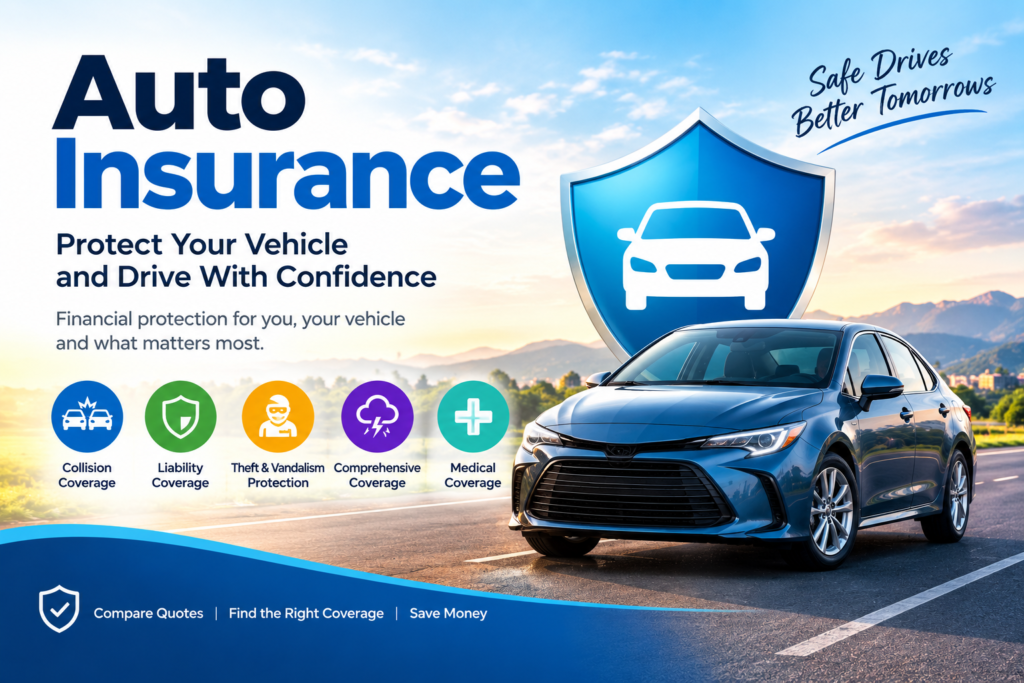
Your vehicle is an important part of everyday life. Whether you use your car for commuting, family trips, errands, or business, unexpected accidents and damage can become expensive. Auto insurance can help protect you financially when covered incidents occur.
Understanding your coverage options, deductibles, limits, and exclusions can help you choose an auto insurance policy that fits your needs and budget.
What Is Auto Insurance?
Auto insurance is a type of insurance coverage that can provide financial protection against certain losses involving your vehicle. Depending on the policy, coverage may help with vehicle damage, injuries, property damage, theft, and liability resulting from an accident.
The coverage available depends on your location, insurance provider, and selected policy.
What Does Auto Insurance Typically Cover?
Auto insurance can include several different types of protection.
1. Liability Coverage
Liability insurance can help cover certain costs when you are legally responsible for an accident that causes injury to another person or damage to their property.
Liability coverage generally includes bodily injury liability and property damage liability, subject to your policy limits.
2. Collision Coverage
Collision coverage may help pay for damage to your vehicle caused by a collision with another vehicle or object.
For example, it may apply after an accident involving another car, a stationary object, or certain types of single-vehicle accidents.
3. Comprehensive Coverage
Comprehensive coverage can help protect your vehicle against certain types of damage that are not caused by a collision.
Depending on the policy, covered events may include theft, vandalism, fire, falling objects, or certain weather-related damage.
4. Uninsured or Underinsured Motorist Coverage
In some locations, you may be able to purchase coverage that helps protect you if you are involved in an accident with a driver who has no insurance or insufficient insurance.
Availability and requirements vary by location.
5. Medical or Personal Injury Coverage
Some auto insurance policies may provide coverage for medical expenses or injuries resulting from an accident. The specific type and availability of this coverage depends on local insurance rules and your policy.
What Can Affect Your Auto Insurance Cost?
Auto insurance premiums can vary from one driver to another. Insurance companies may consider factors such as:
- Driving history
- Location
- Age and driving experience
- Vehicle type and model
- Annual mileage
- Coverage limits
- Deductible
- Claims history
- Available discounts
- Selected coverage options
Because insurers use different pricing models, two drivers with similar vehicles may receive different quotes.
How to Compare Auto Insurance Quotes
Comparing auto insurance quotes can help you understand your available options.
When reviewing quotes, consider more than the monthly or annual premium. Compare:
Coverage limits: Check how much protection the policy provides.
Deductible: Understand how much you may need to pay out of pocket before certain coverage applies.
Exclusions: Review what the policy does not cover.
Optional coverage: Determine whether additional protection is appropriate for your vehicle and situation.
Policy terms: Read the conditions and requirements associated with claims and coverage.
A lower premium does not necessarily mean the same level of protection as a more expensive policy.
Ways to Potentially Save on Auto Insurance
Depending on your insurer and location, several factors may help reduce your insurance costs.
You may be able to save by:
- Comparing quotes from multiple providers
- Asking about available discounts
- Maintaining a clean driving record
- Choosing an appropriate deductible
- Reviewing your coverage regularly
- Taking advantage of eligible safety features
- Bundling eligible insurance policies
Discounts and eligibility requirements vary between insurance companies.
Why Your Driving Record Matters
Your driving history can be an important factor when insurers calculate premiums. Accidents, traffic violations, and previous claims may affect pricing depending on the insurer and local regulations.
Maintaining safe driving habits can help reduce the risk of accidents and may also affect insurance costs over time.
Choosing the Right Coverage for Your Vehicle
The right auto insurance coverage depends on several factors, including the value and age of your vehicle, how frequently you drive, your financial situation, and the level of protection you want.
For a newer or financed vehicle, broader coverage may be required or considered. For an older vehicle, you may evaluate whether certain optional coverage continues to provide enough value.
Your insurance provider can explain the available options and policy requirements.
Frequently Asked Questions
Is auto insurance required?
In many locations, drivers are required to carry certain minimum levels of auto insurance. Requirements vary depending on where you live.
Does auto insurance cover theft?
Comprehensive coverage may provide protection against vehicle theft, subject to the terms, limits, and deductible of the policy.
Does auto insurance cover accident damage?
Coverage depends on the type of policy you have and who is responsible for the accident. Collision, liability, and other coverage types can apply in different circumstances.
How can I get auto insurance quotes?
You can request quotes directly from insurance providers or use a quote-comparison service. Having your vehicle details, driving information, and current coverage available can make the process easier.
Should I compare multiple auto insurance quotes?
Comparing quotes can help you understand differences in premiums, coverage limits, deductibles, and policy options before choosing a policy.
Get Started With Auto Insurance Quotes
Finding suitable auto insurance does not have to be complicated. By comparing available quotes and carefully reviewing coverage, deductibles, limits, and exclusions, you can better understand your options.
Take a few minutes to compare auto insurance quotes and explore coverage options that fit your vehicle and driving needs.

